
Support
Do you have a manual for Snapback?
Yes, we do. Download our in-depth Snapback PDF manual for full usage instructions and an in-depth guide to all features and functions.
Do you have a video tutorial for Snapback?
Yes! Also check out our YouTube channel, where you'll find lots of additional tips-'n'-tricks videos.
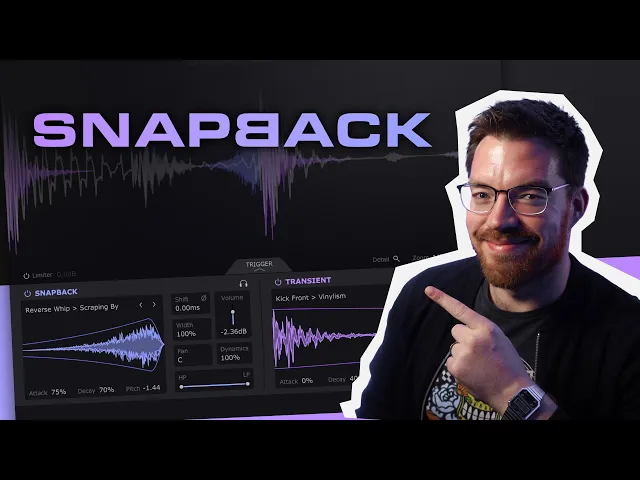
Can I use Snapback's sounds for commercial purposes?
Yes, as long as you're layering Snapback on top of other sounds, rather than directly sampling its output on its own (ie, resampling its onboard samples in isolation), then you can use Snapback for any purpose you like.
Why is there no dry/wet mix control?
Snapback isn't processing the input signal in any way – it's layering other sounds on top of it, so there is no dry or wet signal per se.
Please use the Snapback and Transient volume levels, and the source mixer channel's volume fader, to balance the mix of input signal and Snapback/Transient levels. You can also use Snapback on an auxiliary return channel, of course, and route the input signal to it via your mixer's send controls.